
The term “Eiffel Tower slang” has become increasingly popular in online conversations, memes, and private chats. At first glance, it sounds completely harmless after all, the Eiffel Tower is one of the most iconic landmarks in the world. But in digital culture, phrases often take on meanings far removed from their literal origins.
If you’ve recently seen this phrase on TikTok, Instagram, WhatsApp, or a dating app and felt confused, you’re not alone. Slang evolves quickly, especially in internet communities where coded language spreads fast.
In this comprehensive guide, we’ll explain what Eiffel Tower slang means, where it originated, how it’s used in different contexts, and what you should know before reacting to it.
What Does “Eiffel Tower Slang” Mean?
In modern slang usage, Eiffel Tower slang refers to a visual metaphor inspired by the triangular structure of the Eiffel Tower. It is typically used to describe a specific arrangement involving three individuals, where the positioning resembles the shape of the famous Paris landmark.
Depending on context, the phrase can:
- Be used jokingly among friends
- Carry a suggestive or adult implication
- Appear in meme culture for shock value
- Be referenced indirectly to avoid moderation filters
The key thing to understand is that context determines tone. In some situations, it may simply be exaggerated humor. In others, it may carry a more explicit undertone.
Because of its double meaning literal landmark vs. slang metaphor many people search for “eiffel tower slang” before responding in conversation.
Why Is This Phrase Confusing?
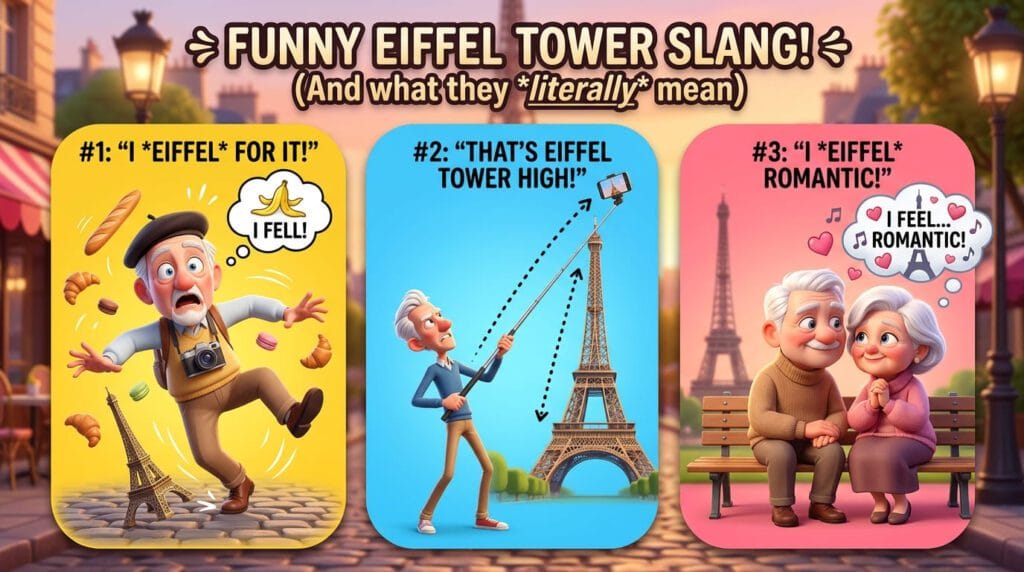
The confusion happens because:
- The Eiffel Tower is globally associated with romance, travel, and Paris.
- The slang meaning is unrelated to tourism or architecture.
- It’s not commonly used in formal language.
- It appears suddenly in memes without explanation.
So when someone casually drops the term in a chat, it can feel unexpected or unclear.
Origin of Eiffel Tower Slang
Like many internet expressions, this term likely developed from visual analogy culture a trend where recognizable shapes or objects are used metaphorically to describe human situations.
The Eiffel Tower’s distinctive triangular frame made it an easy comparison point. Over time, online forums and urban slang communities popularized the phrase. From there, it spread to:
- Reddit threads
- Meme pages
- TikTok trends
- Private messaging apps
By 2026, it has become widely recognized in certain online circles, although not everyone is familiar with it.
Examples of Eiffel Tower Slang in Conversations
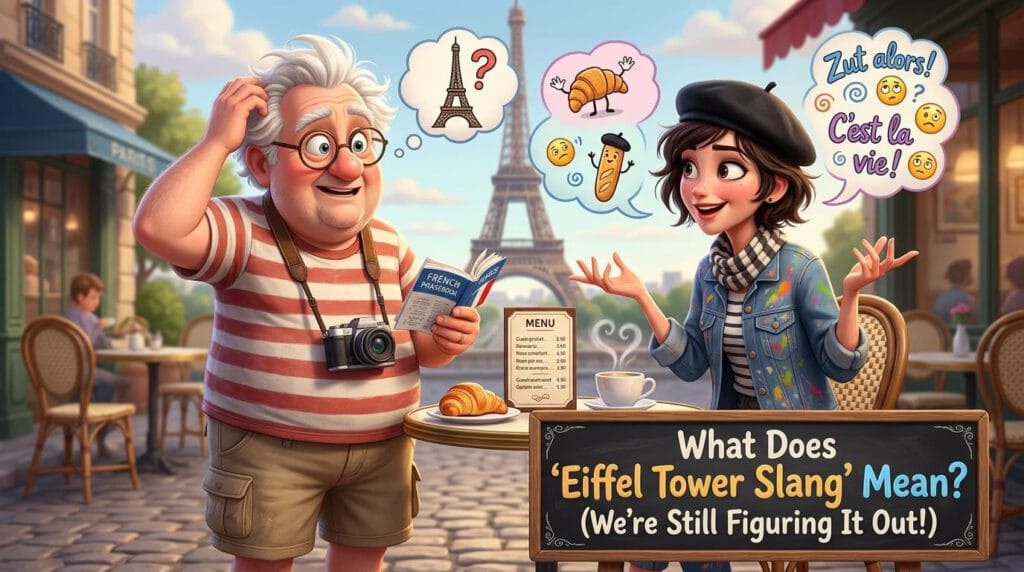
To better understand how it appears, here are some hypothetical examples:
1. Lighthearted Joke
“That night almost turned into an Eiffel Tower situation 😂”
In this case, it may simply exaggerate events for humor.
2. Direct Suggestion
“They were talking about doing the Eiffel Tower.”
Here, the tone may be more intentional and possibly suggestive.
3. Meme Caption
“When your friends say ‘Eiffel Tower?’ and you weren’t ready 😳”
Often used for comedic reaction content.
Again, interpretation depends heavily on context, tone, and relationship between speakers.
How “Eiffel Tower Slang” Is Used on Social Media
Different platforms shape how slang evolves. Let’s break it down:
TikTok
On TikTok, creators often imply the meaning rather than stating it openly to avoid content moderation. It may appear in:
- Reaction videos
- Comedy skits
- Storytime content
- Comment sections
Usually appears in captions, reels, or meme posts. Emojis are often used to hint at the meaning without directly explaining it.
WhatsApp & Private Chats
Because these are private conversations, the phrase may be used more openly. Tone depends on familiarity between participants.
Snapchat
Temporary messages sometimes encourage freer use of slang terms.
Dating Apps
On dating platforms, the term can signal humor, boldness, or a specific interest. Some may use it jokingly, while others may be serious.
If you encounter it on a dating app, it’s important to evaluate whether it aligns with your comfort level.
Is Eiffel Tower Slang Always Inappropriate?
Not necessarily.
While it often carries a suggestive undertone, context matters. Among close friends joking around, it may simply be playful exaggeration. In professional settings, however, it would generally be considered inappropriate.
The same phrase can feel:
- Funny in one setting
- Awkward in another
- Offensive in a formal environment
Understanding audience and environment is crucial.
Literal vs. Slang Meaning
It’s important not to confuse slang usage with legitimate references.
Literal Meaning:
- A historic iron tower in Paris
- Engineering masterpiece
- Symbol of France
- Popular tourist attraction
Slang Meaning:
- A metaphor based on triangular positioning
- Used informally
- Often suggestive
- Popular in meme culture
The two meanings are completely separate except for visual inspiration.
Does It Have Meaning in Professional Fields?
Unlike some slang terms that cross into technical vocabulary, “Eiffel Tower slang” does not have official meaning in:
- Medical terminology
- Physics
- Aviation
- Engineering manuals
However, engineers sometimes reference the real Eiffel Tower when discussing:
- Structural stability
- Load distribution
- Lattice framework design
These references are purely architectural and unrelated to slang.
Common Misconceptions
Let’s clear up a few misunderstandings:
Misconception 1: It Always Refers to Romance
Not true. The slang meaning is not about love or Parisian romance.
Misconception 2: Everyone Knows What It Means
Many people are unfamiliar with it, especially outside younger internet communities.
Misconception 3: It’s Always Serious
Sometimes it’s used purely for humor or shock value.
Similar Slang Patterns
“Eiffel Tower slang” fits into a broader trend where objects or landmarks are used metaphorically. Other slang expressions also rely on:
- Shape-based comparisons
- Visual imagery
- Inside jokes within online communities
However, this particular term is distinctive because it references such a globally recognized landmark.
How Should You Respond If Someone Uses It?
Your response depends on comfort level and context.
If It’s Clearly a Joke
You can respond playfully if you’re comfortable.
If You’re Unsure What They Mean
Ask for clarification or ignore it.
If It Feels Inappropriate
You’re fully within your rights to change the topic or set boundaries.
In Professional Environments
Avoid engaging with slang like this altogether.
Healthy communication always includes respecting personal limits.
Why Is This Slang Still Trending in 2026?
Internet culture thrives on:
- Shock humor
- Double meanings
- Visual metaphors
- Shareable memes
Because the Eiffel Tower is instantly recognizable worldwide, the metaphor is easy to understand once explained. That recognizability keeps the slang circulating.
Additionally, younger generations constantly remix and recycle older slang, giving it new life through trends and viral videos.
SEO Insight: Why People Search “Eiffel Tower Slang”
Search intent behind this keyword usually falls into one of three categories:
- Curiosity after seeing it in a chat
- Confusion from a meme
- Clarification before responding
Users typically want a quick, clear explanation without overly graphic detail. That’s why informational guides like this perform well in search engines.
Is It Safe to Use Publicly?
Generally speaking:
- Safe among close friends who understand context
- Risky in mixed company
- Not suitable for workplace settings
- Use caution on public social media
Remember: once something is posted online, it can be screenshotted and shared.
Final Thoughts
The phrase “eiffel tower slang” shows how dramatically language can shift in the digital era. A world-famous monument known for romance and travel has gained a completely different meaning within online communities.
The most important takeaway? Context is everything.
Before reacting or using the term yourself consider:
- Who you’re speaking to
- Where the conversation is happening
- Whether it aligns with your values
- How it might be interpreted
Understanding modern slang helps you navigate digital conversations confidently, avoid awkward misunderstandings, and maintain respectful communication in every environment.
Language evolves, but awareness keeps you in control.