
A poison tree tattoo may look like a dark, twisted tree at first glance—but beneath the surface, it carries layers of emotional, literary, and psychological meaning. It’s not just body art. It’s a symbol of bottled emotions, quiet resentment, inner transformation, and sometimes, powerful healing.
If you’re searching for the true poison tree tattoo meaning, this in-depth guide will walk you through its origins, symbolism, design ideas, placements, and who typically chooses it. Whether you’re considering getting one or simply curious about the symbolism, you’ll find everything you need right here.
What Does a Poison Tree Tattoo Mean?

At its core, a poison tree tattoo represents suppressed anger, hidden resentment, and the emotional consequences of silence.
The idea is simple but powerful: when emotions—especially anger—are buried instead of expressed, they don’t disappear. They grow. Over time, that growth can turn toxic, affecting relationships, mental health, and personal peace.
For many people, this tattoo serves as:
- A reminder to speak honestly
- A warning about emotional repression
- A symbol of surviving betrayal
- A mark of personal growth after pain
- A tribute to literary symbolism
Unlike traditional tree tattoos that symbolize life and harmony, the poison tree carries tension. It reflects emotional duality—growth mixed with darkness.
The Literary Origin Behind the Poison Tree Symbol
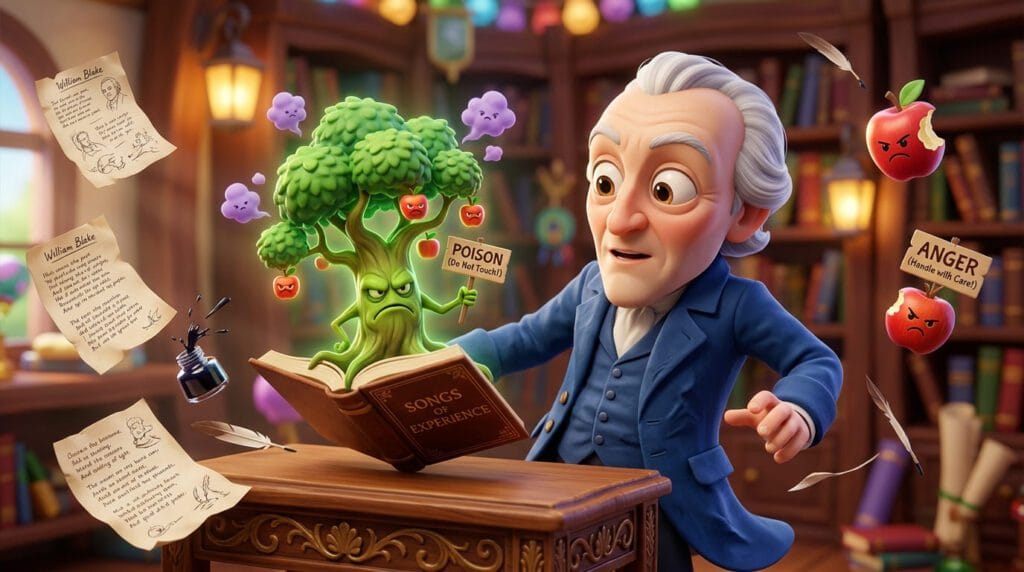
The symbolism of the poison tree comes from classic English poetry. The concept originates from an 18th-century poem that explores how unspoken anger grows into something destructive.
In the poem’s metaphor, anger is compared to a seed. When it’s nurtured in secrecy instead of addressed openly, it grows into a tree bearing poisonous fruit. The fruit ultimately leads to harm.
That metaphor became timeless because it reflects human psychology so accurately.
Today, the poison tree tattoo meaning still connects deeply to that idea:
Silence feeds resentment. Expression prevents destruction.
This literary background is one reason the design appeals to thinkers, readers, and people who appreciate symbolism layered with emotional depth.
Core Symbolism of a Poison Tree Tattoo
Although each person’s story is unique, the meaning behind a poison tree tattoo usually revolves around several central themes.
1. Suppressed Anger
The most common interpretation. The tree symbolizes emotions that were never voiced.
2. Hidden Resentment
Smiling on the outside while pain grows internally.
3. Betrayal
A poisoned fruit often represents a broken trust or emotional wound.
4. Emotional Growth
For some, the tattoo marks the moment they stopped suppressing feelings and started healing.
5. Accountability
It can serve as a lifelong reminder to communicate honestly rather than let negativity build.
What makes this design powerful is that it can represent both destruction and transformation—depending on how the wearer interprets it.
Psychological Meaning: Why This Tattoo Feels So Personal
From a psychological perspective, the poison tree resonates because emotional suppression is something almost everyone experiences.
Research in emotional regulation shows that avoiding difficult feelings doesn’t erase them. Instead, they tend to resurface in stronger or more damaging ways.
The poison tree tattoo visualizes this internal process:
- The roots = buried emotions
- The trunk = growing resentment
- The branches = spreading consequences
- The fruit = the final outcome
For many wearers, this tattoo isn’t about anger itself—it’s about learning how to handle anger in a healthier way.
Poison Tree Tattoo Meaning for Women
For women, the meaning often shifts slightly toward empowerment and emotional survival.
Many women choose this tattoo after:
- Leaving a toxic relationship
- Healing from betrayal
- Overcoming emotional manipulation
- Learning to set boundaries
In these cases, the poison tree doesn’t just symbolize hidden anger—it represents reclaiming control.
Popular Feminine Design Choices:
- Fine line or minimalist styles
- Subtle shading instead of heavy blackwork
- A single fruit highlighted in red or gold
- Placement on ribs, forearm, ankle, or behind the ear
- Adding small flowers to symbolize healing
For women especially, the poison tree tattoo meaning often becomes about growth after emotional damage rather than the damage itself.
Poison Tree Tattoo Meaning for Men
For men, this tattoo commonly represents emotional restraint, inner battles, and mastering destructive impulses.
Instead of expressing vulnerability outwardly, many men connect with the symbolism of controlling anger rather than being controlled by it.
Common Reasons Men Choose It:
- Personal transformation
- Overcoming rage or aggression
- Surviving betrayal
- Literary appreciation
- Representing inner strength
Popular Masculine Design Styles:
- Bold blackwork
- Detailed bark and root systems
- Incorporating ravens, skulls, or storm imagery
- Forearm, shoulder, chest, or full sleeve placements
In this context, the poison tree tattoo meaning becomes about discipline, emotional maturity, and strength through self-awareness.
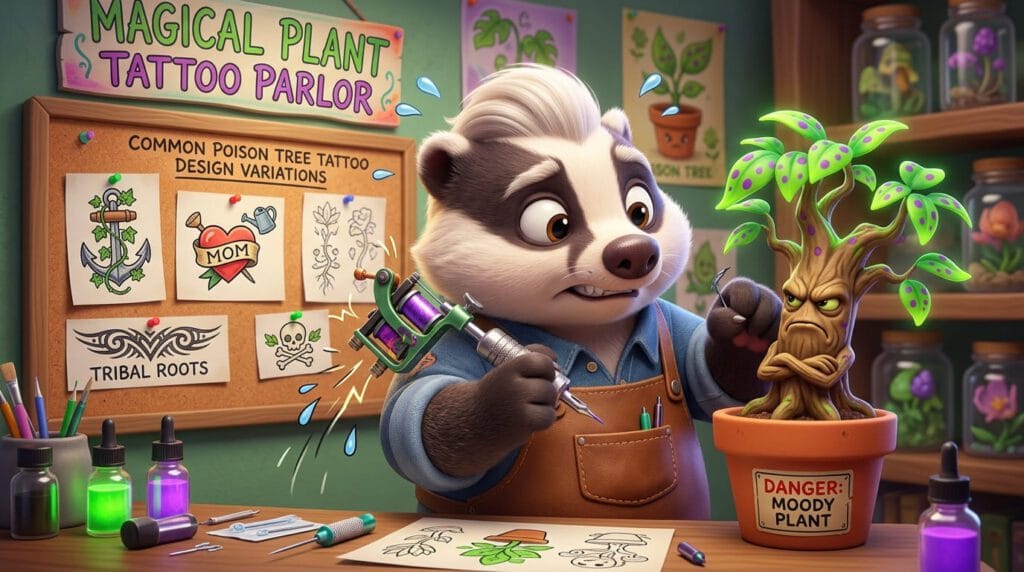
Common Poison Tree Tattoo Design Variations
There’s no single way to design a poison tree tattoo. Each variation adds a different layer of symbolism.
1. Leafless Twisted Tree
Represents emotional emptiness or unresolved pain.
2. Tree with a Single Apple
Symbolizes a specific betrayal or event.
3. Tree with Ravens or Crows
Adds themes of mystery, transformation, or fate.
4. Visible Root System
Represents deep-seated trauma or long-term emotional patterns.
5. Snake Wrapped Around the Tree
Symbolizes deception or temptation.
6. Tree with Blooming Flowers
Shows healing emerging from pain.
7. Minimalist Line Art Tree
Represents quiet reflection instead of dramatic anger.
The beauty of this tattoo is that it can be highly personalized while still maintaining its core symbolism.
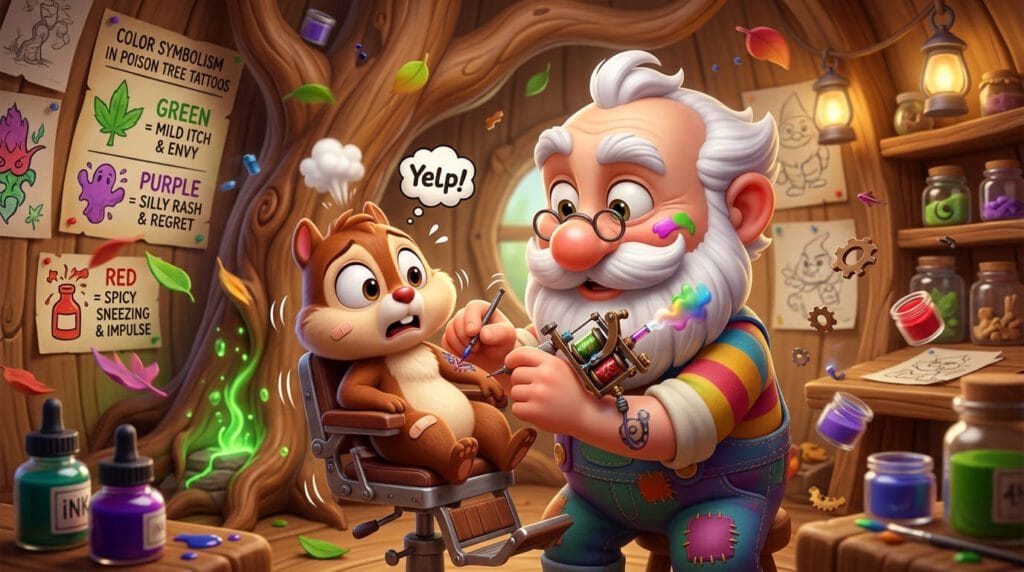
Color Symbolism in Poison Tree Tattoos
While most poison tree tattoos are done in black and grey, color can dramatically shift the meaning.
- Black: Suppressed emotion, intensity, darkness
- Red (especially on the fruit): Danger, betrayal, passion
- Green accents: Growth, healing, renewal
- Grey wash: Emotional numbness
- Purple: Transformation and introspection
- Gold highlights: Awareness and enlightenment
If someone wants a more hopeful interpretation, adding green or gold subtly transforms the design from destructive to redemptive.
Best Placement Ideas for a Poison Tree Tattoo
Placement affects both visibility and emotional impact.
Forearm
One of the most popular placements. Great for detailed branches and roots.
Back
Ideal for large, dramatic pieces with full canopy and root systems.
Ribcage
More personal and intimate. Often chosen for emotionally meaningful tattoos.
Shoulder
Works well with curved branch designs.
Wrist or Ankle
Perfect for minimalist versions.
Sleeve Integration
Allows the poison tree to become part of a larger life story told through ink.
If the tattoo is meant as a personal reminder, hidden placements are common. If it’s a statement piece, forearm and back designs dominate.
Is a Poison Tree Tattoo Negative?
Not necessarily.
While the symbol originates from themes of hidden anger, most modern interpretations focus on:
- Emotional awareness
- Healing
- Personal growth
- Learning from mistakes
The meaning depends entirely on the wearer’s intention.
For some, it’s a cautionary reminder.
For others, it’s proof they’ve already faced their inner darkness.
Frequently Asked Questions (SEO Optimized)
What does a poison tree tattoo symbolize?
A poison tree tattoo symbolizes suppressed anger, hidden resentment, and the emotional consequences of silence. It can also represent healing and personal growth.
Is a poison tree tattoo based on literature?
Yes. The symbol originates from classic English poetry where anger is metaphorically described as growing into a poisonous tree.
What does the apple mean in a poison tree tattoo?
The apple represents the outcome of unresolved anger—often betrayal, revenge, or emotional damage.
Is a poison tree tattoo a bad omen?
No. It’s generally seen as a symbolic reminder rather than a negative omen.
Who should get a poison tree tattoo?
Anyone who connects with themes of emotional growth, overcoming resentment, literary symbolism, or personal transformation.
Final Thoughts: Is the Poison Tree Tattoo Right for You?
The poison tree tattoo meaning goes far beyond a dark aesthetic. It represents something deeply human—the way emotions grow when left unspoken.
For some, it’s about confronting inner anger.
For others, it marks the end of a toxic chapter.
And for many, it serves as a reminder to communicate openly and live honestly.
If you’re drawn to meaningful tattoos with emotional and literary depth, the poison tree may be one of the most powerful designs you can choose.
Because in the end, it’s not just about the tree.
It’s about what you decide to grow from your own roots.